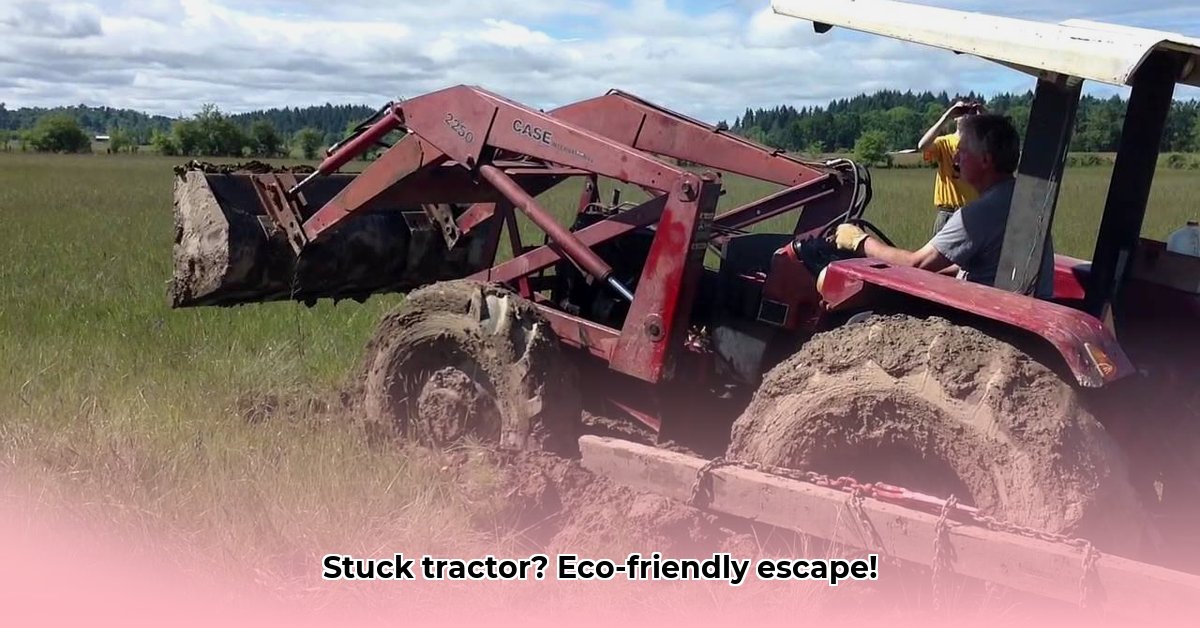
Nobody wants a tractor stuck in the mud – it's frustrating, time-consuming, and potentially damaging to both equipment and the environment. For optimal tractor power usage, consider tractor PTO horsepower. This guide provides actionable steps to safely and sustainably extract your tractor from a muddy predicament, minimizing downtime and environmental impact. We'll cover various recovery methods, safety precautions, and preventative measures for a smoother farming operation.
Assessing the Situation: A Crucial First Step
Before attempting any recovery, carefully assess the situation. This detailed evaluation will guide you towards the most effective and safe method.
- Mud Depth: Is the mud ankle-deep or engulfing the tractor's undercarriage? This determines the complexity of the extraction.
- Slope: A sloped surface dramatically increases difficulty and risk. Steeper inclines require extra caution and potentially different strategies.
- Tractor Weight: Heavier tractors demand more powerful recovery methods. A small tractor might require simpler solutions than a large one.
- Available Tools: What resources do you have? Recovery straps, winch, another tractor, shovels? Your tools dictate your best approach.
- Soil Type: The soil's consistency (clay, sand, silt) impacts traction and the risk of compaction. Knowing this influences your method choice.
Tractor Rescue Methods: Choosing Your Strategy
Several methods can free a stuck tractor, each suited to different conditions and resource availability.
1. Recovery Straps: A Simple, Yet Important Option
- Pros: Relatively inexpensive and readily available, suitable for less severe situations.
- Cons: Requires a strong anchor point (another vehicle or a sturdy fixed object) and straps rated for your tractor's weight; improper usage can damage equipment.
Step-by-Step Instructions:
- Securely attach the straps rated for at least double your tractor's weight to both your stuck tractor and the recovery vehicle. Ensure even tension on both sides.
- The recovery vehicle engages low gear and slowly applies power. Avoid jerking movements.
- Constantly monitor the straps for any signs of wear or breakage. If the straps aren't moving the tractor, stop and reassess. You might need an alternative method.
2. Manual Excavation: The Environmentally Friendly Approach
- Pros: Minimizes soil compaction and is gentler on the environment; no heavy machinery needed.
- Cons: Labor-intensive and time-consuming; only practical for shallow mud and smaller tractors.
Step-by-Step Instructions:
- Use shovels or similar tools to carefully remove mud from around the tractor's wheels, creating a space for better traction.
- Construct makeshift ramps using planks or sturdy boards to provide added traction points.
- Gently rock the tractor back and forth; use the shovels to assist wheel movement onto the ramps.
3. Heavy Equipment Assistance: For Tough Situations
- Pros: Most effective for deeply stuck tractors in difficult conditions, significantly reducing recovery time.
- Cons: Potential for significant soil compaction and higher costs; requires access to specialized equipment.
Step-by-Step Instructions:
- Contact a professional with suitable heavy equipment (e.g., a heavy-duty wrecker or skid steer loader). Clear communication with the operator is critical.
- Direct the operator to minimize the affected area and reduce soil compaction. Supervise the entire process.
Calculating Minimum Recovery Capacity: Ensuring Success
The minimum recovery capacity must exceed your tractor's weight, accounting for mud resistance and slope. While doubling the tractor's weight is a general rule of thumb, a more precise calculation (W + ARR + AGR) is crucial for challenging conditions. This formula considers:
- Tractor Weight (W): The tractor’s weight plus any load.
- Additional Rolling Resistance (ARR): Depends heavily on soil type; muddy clay has a much higher ARR than firm soil. Consult engineering resources for specific coefficients.
- Additional Gradient Resistance (AGR): Increases with steeper slopes; refer to engineering resources for slope-dependent multipliers.
A simplified approach for less experienced operators: double the tractor's weight as a starting point and increase it further based on the severity of the situation (deep mud, steep slope). Always err on the side of caution.
Environmental Considerations: Sustainable Farming Practices
Minimize soil compaction. Use wide-based planks or boards under recovery equipment to distribute the weight. Manual excavation is the most eco-friendly option. Prioritize methods that reduce environmental impact. As Dr. Emily Carter, Soil Scientist at the University of California, Berkeley, stated, “Minimizing soil disturbance is paramount for long-term soil health and agricultural sustainability.”
Safety Precautions: Protecting Yourself and Your Team
Safety is paramount. Always wear appropriate personal protective equipment (PPE), including gloves and eye protection. Never work alone – have a spotter or assistant. For added stability, use wheel chocks on your recovery vehicle. Remember, your safety is an investment in your farm's long-term success.
Post-Recovery Inspection and Maintenance
After recovery, thoroughly inspect the tractor and recovery equipment for any damage. Address any issues promptly to prevent future complications. Regular maintenance is crucial for preventing recurring incidents.
Preventative Measures: Avoiding Future Mud-Traps
Proactive planning reduces the risk of future incidents:
- Route Planning: Use GPS to avoid known muddy areas.
- Tire Pressure: Adjust to optimize traction based on terrain.
- Soil Management: Improve drainage to minimize waterlogged areas.
- Weight Distribution: Ensure even weight distribution on your tractor.
By implementing these techniques and prioritizing safety, you can efficiently recover a stuck tractor, minimize environmental impact, and ensure the continued productivity of your farm.